Table of contents
Emergency response gear has undergone remarkable transformations over the decades, adapting to evolving hazards and technological advancements. This fascinating exploration highlights how changes in equipment have directly impacted the safety and effectiveness of emergency responders. Delve deeper into each era to discover the innovations and challenges that have shaped the tools protecting those on the front lines.
Early days of emergency gear
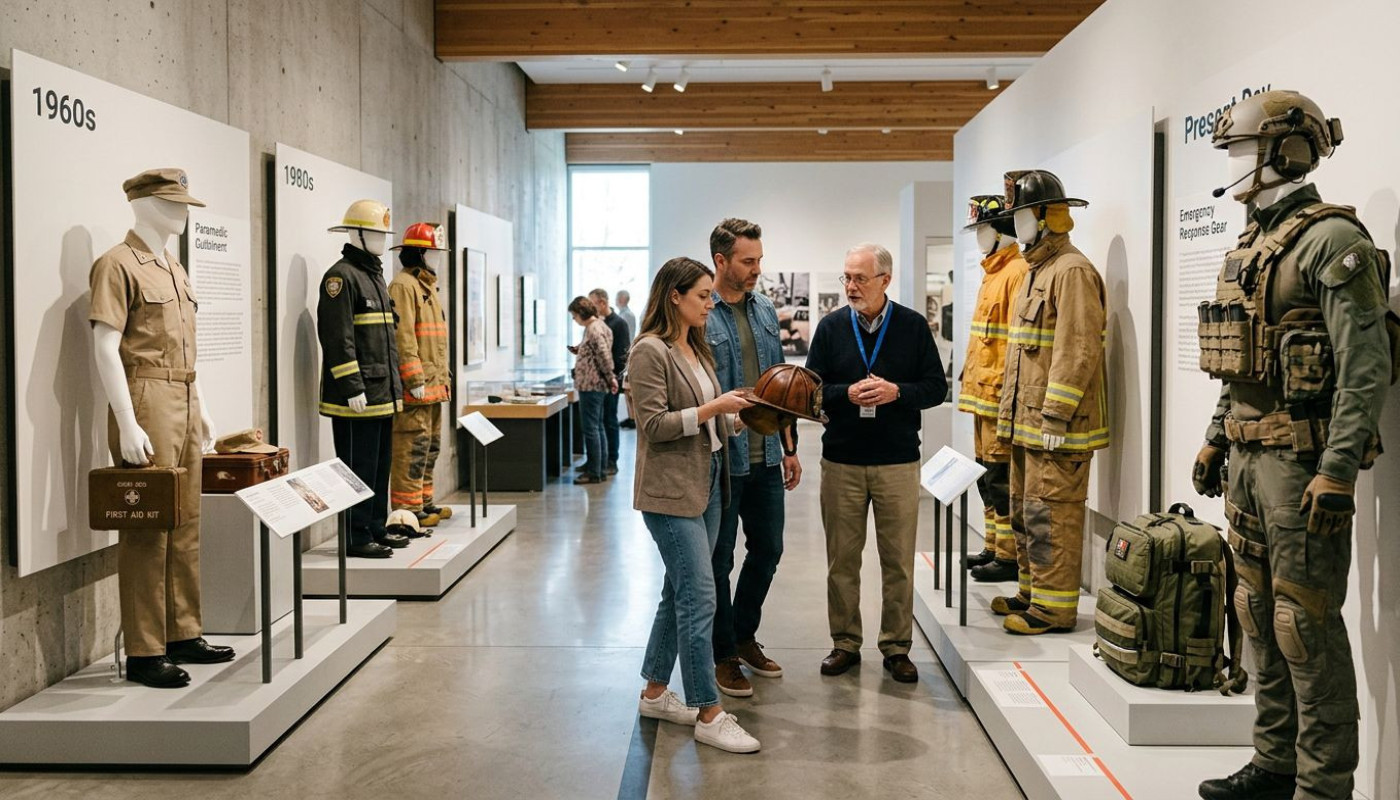
During the early 20th century, early emergency gear largely consisted of basic protective equipment such as heavy woolen coats, leather gloves, and simple hats used by firefighters and rescue teams. Historical emergency response relied on first responder tools like hand-cranked sirens, buckets, axes, and rudimentary stretchers, reflecting limited advancements in personal protective equipment (PPE) design. The period was characterized by significant challenges, including the absence of standardized gear and a reliance on natural materials that offered minimal defense against hazardous conditions. Emergency communication evolution lagged, with responders often constrained to messengers, whistles, or rudimentary telegraph systems, leading to delays and miscommunication during crises. These limitations not only restricted the efficiency and safety of first responders but also highlighted the pressing need for innovation in protective gear and reliable communication tools, shaping the future direction of emergency response technology.
Mid-century advancements
The period from the 1940s to the 1970s saw transformative progress in mid-century emergency tools, marked by a shift towards improved PPE and innovative communication devices such as portable radios. As industrial manufacturing developed, firefighter equipment history reflects a transition from wool and rubber-based uniforms to flame-resistant materials like Nomex, significantly enhancing responder safety. The emergence of the self-contained breathing apparatus (SCBA) during this era provided firefighters with reliable protection from smoke and toxic gases, enabling longer and safer operations within hazardous environments. At the same time, emergency medical kits became more sophisticated, incorporating advanced supplies tailored for field use, which allowed first responders to deliver more effective pre-hospital care.
These decades also witnessed the integration of portable radios, which radically changed coordination and response times by enabling real-time communication between teams and command centers. Improved PPE, including hard hats, high-visibility garments, and reinforced gloves, contributed to a marked reduction in responder injuries. Advances in materials science and ergonomic design ensured that equipment became lighter, stronger, and more comfortable to wear, directly benefiting the efficiency and safety of emergency personnel. Collectively, these technological and material breakthroughs during the mid-century period laid the groundwork for the modern standards observed in contemporary emergency response gear.
Digital revolution impact
The late 20th century marked a transformative phase for emergency communication technology, as the emergence and rapid evolution of digital emergency gear revolutionized responder capabilities. From the 1980s through the early 2000s, agencies began phasing out analog systems in favor of digital radios for responders, allowing encrypted channels, enhanced range, and clearer audio even in chaotic environments. This shift enabled not only more secure conversations but also facilitated real-time data transmission, which became invaluable for coordinating across various agencies during large-scale crises or multi-jurisdictional incidents. The introduction of emergency monitoring devices, such as wearable sensors and portable biometric trackers, further contributed to improved situational awareness and personal safety by transmitting live health metrics and environmental data to command centers.
Alongside communication upgrades, data management in emergencies experienced considerable progress. Digital platforms enabled responders to access maps, building layouts, and hazardous material information instantly, streamlining operations and reducing critical response times. Centralized databases and advanced software allowed for rapid incident reporting, resource allocation, and post-incident analysis, providing a comprehensive overview that helped refine future strategies. These advancements not only increased efficiency during deployments but also significantly bolstered the safety of both responders and civilians by minimizing guesswork and enhancing informed decision-making.
As digital emergency gear became more sophisticated, the integration of real-time data transmission into wearable monitoring devices and communication tools transformed the overall landscape of emergency response. Responders could now receive timely alerts about changing conditions, track personnel locations, and adjust tactics on the fly, dramatically elevating operational agility. For readers interested in how technology outside emergency services is also evolving, the platform Non GAMSTOP Casinos demonstrates how specialized digital platforms are reshaping various sectors, much like https://oncallfire.uk/ showcases developments in emergency response technologies.
Modern gear and smart technology
Smart emergency gear has rapidly transformed the way first responders operate, driven by breakthroughs in wearable technology for responders, emergency sensors, and integrated communication networks. Today, devices such as smart helmets, biometric vests, and real-time environment monitors are seamlessly connected via the Internet of Things (IoT), allowing for swift data exchange between personnel and command centers. These wearables track vitals, detect hazardous substances, and transmit live video or environmental data, offering responders heightened situational awareness in unpredictable environments. With emergency sensors embedded directly into equipment, threats like toxic gases, extreme temperatures, or structural instability can be identified instantly, reducing risk and ensuring modern responder safety.
Integrated communication networks now form the backbone of emergency response operations. High-bandwidth, mesh networks and 5G connectivity enable responders to maintain uninterrupted, secure communication even in remote or infrastructure-compromised areas. This connectivity allows for rapid coordination, deployment of resources, and instant sharing of critical updates, all while ensuring sensitive information is protected. The reliability and resilience of these networks significantly amplify operational efficiency and lead to faster, more informed decision-making under pressure.
Wearable technology for responders does not only focus on individual safety but also enhances team coordination. Smart emergency gear often features location tracking, injury detection, and automated distress alerts, allowing supervisors to monitor personnel in real time and deploy support where needed. IoT-enabled systems can even predict equipment failures or monitor responder fatigue, further optimizing preparedness and response. The convergence of advanced emergency sensors, robust communication networks, and real-time data analytics represents a leap forward in modern responder safety, setting a new standard for protecting lives and property during emergencies.
Future trends in emergency gear
The landscape of future emergency gear is on the brink of transformation with the emergence of next generation emergency technology. Innovations such as augmented reality (AR), advanced emergency robotics, and automated response equipment are set to redefine how responders approach crises. Augmented reality for responders offers hands-free access to live data overlays, immediate hazard identification, and step-by-step guidance, which can streamline complex procedures in high-pressure environments. Robotics, from autonomous drones for aerial reconnaissance to wearable exoskeletons for heavy lifting, are enhancing both the reach and safety of emergency personnel. Automated response equipment, including self-deploying medical kits and intelligent fire suppression systems, can reduce response times and human error.
The integration of these cutting-edge tools is anticipated to significantly boost operational effectiveness while safeguarding responder health. Emergency robotics minimize direct exposure to dangerous environments, allowing teams to focus on strategic tasks rather than physical risks. The application of AR not only augments situational awareness but also supports decision-making in rapidly evolving scenarios. As automated systems become more sophisticated, responders may soon be equipped with predictive analytics that anticipate risks and propose optimal interventions. Such advancements in future emergency gear promise a new era where technology and human expertise converge, resulting in faster, safer, and more coordinated emergency response worldwide.
On the same subject